NASA Goddard Space Flight Center, Wikimedia Commons, CC BY 2.0
Or, as Bucky would say: living within the confines of Spaceship Earth.
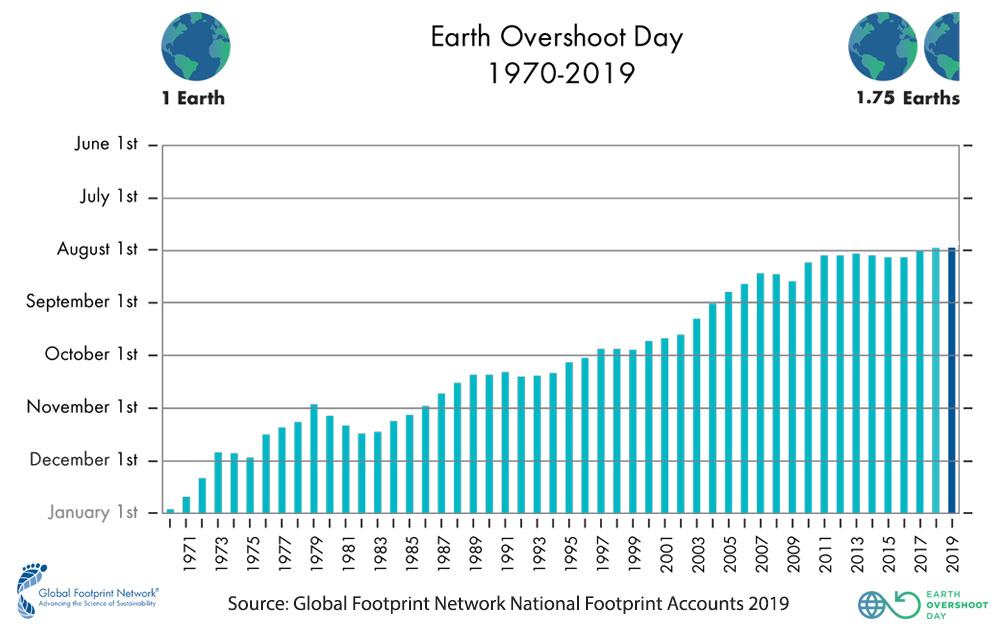
We live on one planet, yet we consume 1.75 Earths’ worth of resources. This is unsustainable. As designers of the built environment, we must rethink how we retrofit and build to fit within our planetary limits.
We are the first generation with enough data to understand and articulate what has been happening to our planet as a result of our collective behaviour. The Stockholm Resilience Centre has contextualized this data with the Planetary Boundaries framework. The PBF proposes science-based targets that define the limits of acceptable alteration to key Earth systems. The cumulative impacts of human activity must not surpass these targets if the Earth is to remain a safe operating space for future generations.
Due to its universal reach, scale, and adaptability, the PBF is ideally suited to help us re-think design and construction of the built environment. The PBF can guide us toward solutions that design and retrofit cities to replenish, rather than deplete, our planet of its limited natural resources. Our industry plays a major part in polluting the environment, consuming resources, and producing waste. By thinking systemically about our practices and impacts, we can create the opportunity to drive significant positive change for the planet.
Arup has adopted the United Nations’ Sustainable Development Goals (SDGs) to align with our mission to shape a better world. The PBF provides us the scientific metrics to underpin the societal and economic targets and ambitions set by the SDGs.
WHAT : The intention of this blog is to explore what it means to design regenerative cities by considering the Planetary Boundaries (PB) as a framework for design, retrofit, build, and inhabitation. WHY the PBs : We have scoured the Earth far and wide to find a framework, structure, system, something to help creators of the built environment (all man made environments) to design regenerative systems. To date this is the most developed framework as it boasts scientific metrics and reasoning to back it up. WHY a blog : As I/we go through this discovery process, I thought it could be nice to bring along 7bn other people with me. To share, think, create, ideate, and explore together. HOW : I’ll primarily be focusing on research, interviews and case studies to highlight findings, exemplars, examples of what we could, should, must be doing to change the system.

Comments
Post a Comment